
The Genetic Heritage at Risk
Silent SpringThis flow traces Carson’s concern that chemicals could damage chromosomes and transmit consequences beyond the exposed individual.
increasing Bearing strength in each event
 decreasing
Bearing strength in each eventdecreasingRadiation Reveals Mutation
Heredity Becomes Visible
Muller’s Discovery
Hermann J. Muller showed that X-radiation could produce mutations in succeeding generations. The discovery established that environmental forces could alter hereditary material.
A New Standard of Concern
Radiation’s genetic effects became widely discussed, but Carson argues that chemical agents could produce comparable injuries. Public attention had not kept pace with that possibility.
Chemicals Imitate Radiation
The First Chemical Mutagen
A New Finding
Charlotte Auerbach and William Robson found that mustard gas could produce chromosome abnormalities and mutations. Their work showed that chemicals could damage genetic material in ways resembling radiation.
A Broader Category
Subsequent research added other chemicals to the list of agents capable of disturbing cell division or heredity. Carson asks why widely used pesticides should escape similar scrutiny.
Pesticides Affect Cell Division
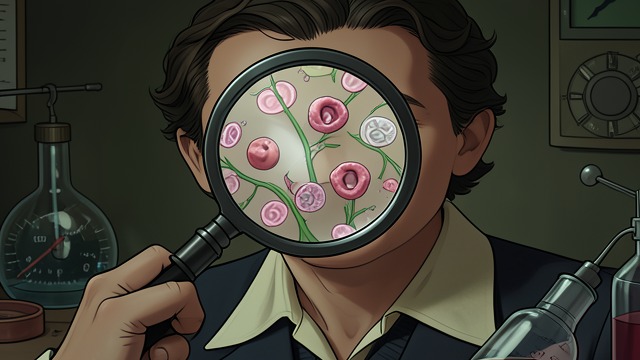
Evidence Across Organisms
Chromosome Changes
Experiments described by Carson found chromosome damage, abnormal cell division, or mutations after exposure to certain pesticides and herbicides. Some plant cells became deformed or unable to divide normally.
Research Remains Incomplete
These findings were scattered across physiology and genetics rather than gathered in a comprehensive pesticide study. The absence of a systematic investigation limited what scientists could confidently conclude.
Human Disorders Come Into View
A New Medical Field
Human Chromosomes Counted
Improved methods made it possible to examine human chromosomes accurately. Researchers began identifying abnormalities associated with developmental conditions and diseases.
Environmental Causes Unknown
The causes of many abnormalities remained uncertain. Carson’s point is that an emerging medical field should not ignore chemicals that can affect chromosome behavior in experimental systems.
A Heritage Passed Forward

The Future Is Present
Inheritance at Stake
Genes connect generations and hold the biological information passed from past life into the future. Chemical damage to germ cells could therefore reach people not yet born.
A Preventive Obligation
Carson argues that the lack of required genetic testing is a serious gap in chemical oversight. The issue is not only individual illness but whether society will preserve the inheritance it has received.
1927
Early 1940s
In studies discussed in Chapter 13
After improved chromosome techniques in 1956
At the end of Chapter 13
